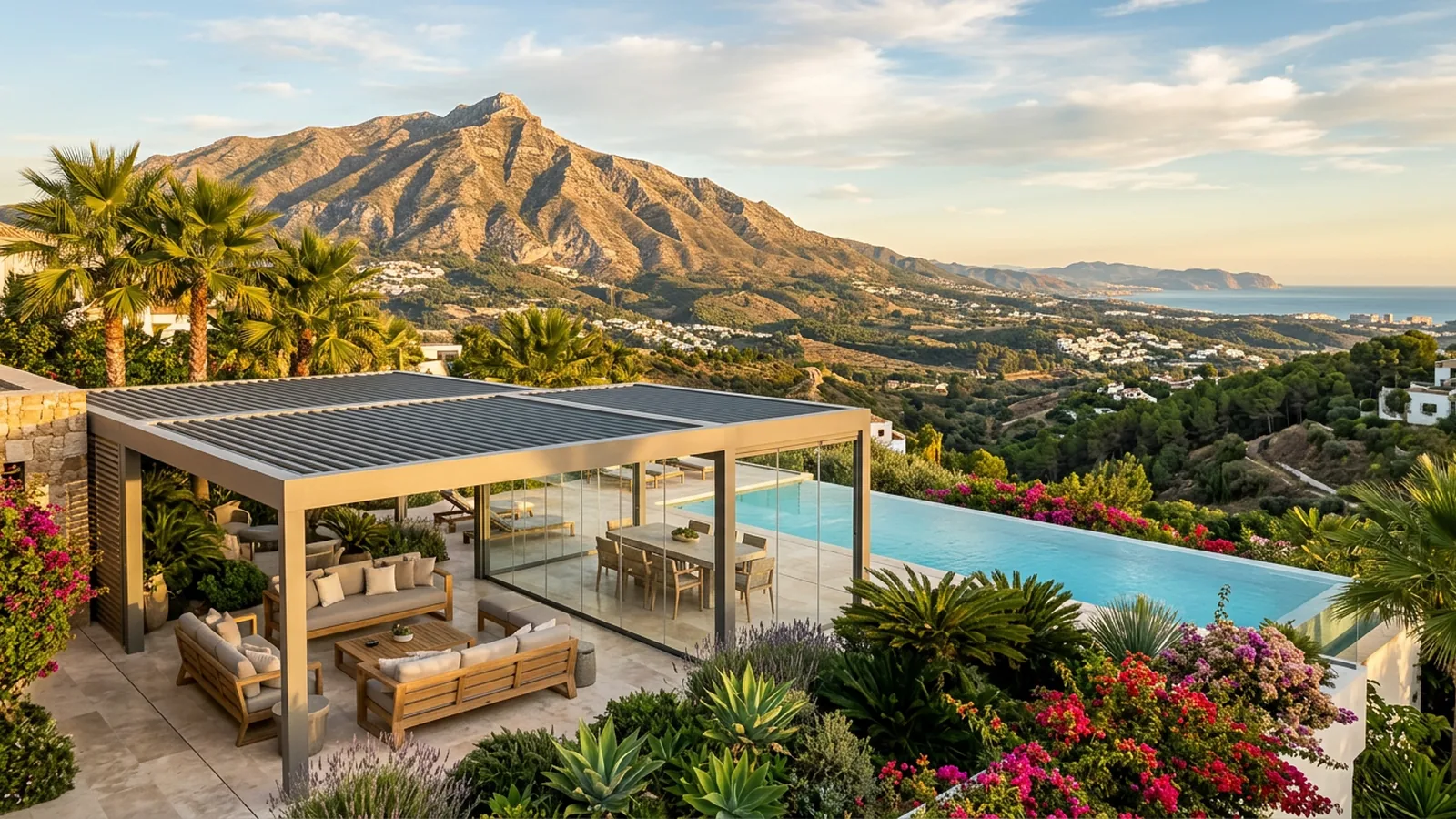
Swimming Pools in Marbella
Premium swimming pools for your Marbella home — designed and installed by trusted local pros. Free, no-obligation quotes.
Get Your Free QuoteBuilding, Renovating, and Maintaining Premium Piscinas in Marbella
Marbella is the jewel of the Costa del Sol Occidental. Framed by the dramatic peak of La Concha and the Sierra Blanca massif—the majestic foothills of the Sierra de las Nieves national park—the municipality stretches across 27 kilometres of Mediterranean coastline. From the exclusive estates of Sierra Blanca and Nagüeles down to the Golden Mile, and extending west through Nueva Andalucía’s Valle del Golf to San Pedro de Alcántara and east to Elviria and Las Chapas, this is a premium, villa-led luxury market.
With a registered municipal padrón population of 166,999 residents as of December 31, 2024 (and an official INE figure of approximately 159,000 from January 1, 2024), Marbella is a vibrant, cosmopolitan hub. Approximately 33 percent of the population is foreign-born, representing 52,173 residents from 153 registered nationalities. High-net-worth buyers from the United Kingdom, Scandinavia (Sweden, Norway, and Denmark), Germany, Belgium, the Netherlands, Russia, Ukraine, and Colombia drive a sophisticated demand for high-specification outdoor living.
In this elite coastal environment, a swimming pool (piscina) is not a mere luxury; it is the central architectural anchor of the Mediterranean lifestyle. However, building, renovating, and maintaining a pool in Marbella requires navigating highly specific microclimates, marine-grade material standards, complex local planning laws, and community regulations.
Navigating Marbella’s Complex Planning and Licensing Framework
Before breaking ground or signing a contract for a pool build or major renovation, understanding the legal landscape of the Ayuntamiento de Marbella is critical. The planning status of many plots in Marbella remains legally complex and uncertain.
The PGOU Dilemma and the New PGOM
The 2010 Plan General de Ordenación Urbana (PGOU) was annulled by the Spanish Supreme Court in a landmark ruling on October 27, 2015. This ruling restored the outdated 1986 PGOU as the governing urban plan for the municipality. Because of this retroversion, an estimated 18,000 properties across Marbella exist in a state of planning non-conformity or legal uncertainty.
While a new Plan General de Ordenación Municipal (PGOM) received a favourable environmental report from the Junta de Andalucía in February 2026 and awaits final plenary approval, all current pool designs, setbacks, and structural calculations must be strictly verified against the 1986 PGOU. This is especially vital in protected-zone overlays or established urbanizaciones like Las Chapas, Elviria, and Sierra Blanca.
License Types: Obra Mayor vs. Declaración Responsable
Marbella municipal ordinances are strict regarding what qualifies for the fast-track declaración responsable (responsible declaration) process:
- Obra Mayor (Major Works License): Building a new concrete or fibreglass swimming pool, altering the structural footprint of an existing pool, or executing any volume expansion requires a full obra mayor license. This process requires a formal project signed by an architect or engineer and approved by the Colegio Oficial.
- Declaración Responsable: Minor aesthetic pool renovations, such as re-tiling with gresite or replacing pool filtration equipment, can proceed under this fast-track notification. However, Marbella ordinances explicitly exclude any terrace glazing, structural enclosures, or volume expansions from the declaración responsable pathway.
- Coastal Regulations: If your property lies close to the beach, particularly in areas like Las Chapas or Puerto Banús, works must comply with the Ley de Costas (Coastal Law), which imposes a strict servidumbre de protección (protection easement) setback of between 20 and 100 metres from the maritime-terrestrial public domain.
- Pergolas and Setbacks: If you are installing a pergola alongside your pool deck, note that while small pergolas under approximately 5 square metres often require no formal license, the Ayuntamiento de Marbella has issued a specific interpretive criterion regarding setback and separation distances from property boundaries. You cannot simply build a pergola up to your neighbour's boundary line without meeting these municipal separation minimums.
Community Approvals (Ley de Propiedad Horizontal)
For townhouses and apartments in developments like Los Naranjos, Aloha, or beachfront complexes in Puerto Banús, any pool modification or terrace integration that affects common elements (including structural slabs, community pipework, or highly visible exterior aesthetics) falls under the Spanish Ley de Propiedad Horizontal. Any such modification requires formal community of owners approval, typically requiring a three-fifths qualified majority vote.
New Pool Construction: Concrete vs. Fibreglass
When constructing a new pool in Marbella, the choice of construction method dictates the longevity, design flexibility, and overall value added to your villa.
1. Gunite Concrete Pools (Obra de Hormigón Proyectado)
This is the gold standard for Marbella’s luxury estates in Sierra Blanca, Cascada de Camoján, and Nueva Andalucía. Gunite involves spraying concrete at high velocity onto a steel-reinforced cage, creating a seamless, monolithic shell.
- Pros: Complete design freedom. It allows for infinity edges overlooking the Mediterranean, integrated beach entries, sunken chill-out lounges, and custom thermal spa zones.
- Cons: Longer construction times (typically 8 to 12 weeks) and higher initial capital outlay.
- Cost Orientation: A high-spec, custom-built concrete pool in Marbella ranges from 30,000 EUR to over 65,000 EUR, depending on excavation complexity, access, and premium finishes.
2. Pre-formed Fibreglass Pools (Piscinas de Poliéster/Fibra)
Fibreglass pools are manufactured off-site and craned into an excavated pit onto a prepared gravel bed.
- Pros: Rapid installation (often completed in under two weeks) and a smooth, non-porous surface that resists algae growth and requires fewer chemicals.
- Cons: Limited shapes, depths, and widths due to road transport restrictions. Craning a pool shell into tight hillside plots in Nagüeles or elevated parts of Nueva Andalucía can also present significant logistical challenges.
- Cost Orientation: A standard fibreglass pool installation ranges from 20,000 EUR to 35,000 EUR.
Pool Renovation: Modernising Marbella’s Classic Pools
Many villas built during the building booms of the 1990s and early 2000s in areas like Elviria and the Valle del Golf feature dated pool designs. Modernising these assets not only elevates the property's aesthetic but also improves energy and water efficiency.
High-End Tile and Lining Upgrades
- Premium Glass Mosaic (Gresite): Modern trends have moved away from standard blue tiles toward large-format porcelain stoneware (porcelánico) or exotic glass mosaics in white, charcoal grey, or emerald green. These tones mimic natural stone and reflect Marbella’s bright sunlight to create a turquoise, lagoon-like water colour.
- Reinforced PVC Liners (Lámina Armada): For older pools suffering from structural micro-fissures due to ground movement, a reinforced 1.5mm or 2.0mm PVC liner (such as Alkorplan) is an excellent solution. It acts as a completely watertight, flexible skin that is welded directly inside the pool shell.
Converting to Saltwater Chlorination (Electrólisis Salina)
Traditional chlorine pools can be harsh on the skin, eyes, and hair. Upgrading to a saltwater chlorination system is now standard practice for Marbella renovations. These systems use a low concentration of salt (around 4 to 5 grams per litre, roughly the salinity of a human tear) to automatically generate pure chlorine through electrolysis. This eliminates the chemical smell, reduces running costs, and provides a much gentler swimming experience.
Pool Heating: Extending the Swim Season Year-Round
While Marbella enjoys over 320 days of sunshine a year, unheated pool water is generally comfortable only from late May to late September. To enjoy your investment year-round, efficient heating is essential.
1. Inverter Heat Pumps (Bombas de Calor)
Modern inverter heat pumps extract heat from the ambient Andalusian air and transfer it to the pool water. Unlike older on/off systems, inverter pumps continuously adjust their compressor speed, running at highly efficient low-power modes once the target temperature is reached.
- Consideration: To prevent heat loss overnight due to the cool mountain breezes rolling down from La Concha, a heat pump must be paired with a thermal pool cover (slat cover or bubble cover).
2. Solar Pool Heating
Utilising Marbella’s abundant sunshine, solar collectors can be mounted on villa roofs or pergolas to circulate and warm the pool water directly. While highly eco-friendly, they are dependent on daily sunlight hours and are less reliable for maintaining precise temperatures during the cooler winter months of December and January.
Combatting Coastal Salitre and the Microclimate
Marbella’s unique geography creates a demanding environment for outdoor materials. The close proximity to the sea subjects properties to high levels of salitre (salt spray and airborne marine salinity). Simultaneously, the area experiences the hot, dry terral wind blowing from the interior, as well as the humid Levante wind from the east.
Material Selection for the Pool Surround
- Marine-Grade Metals: Any metallic components near the pool—such as ladder steps, glass balustrade spigots, outdoor shower fixtures, and pergola frames—must be constructed from marine-grade materials. Standard stainless steel will tea-stain and corrode rapidly in this high-salinity air. Specify AISI 316L stainless steel or powder-coated, marine-grade aluminium (Qualicoat Class 2) to ensure long-term durability.
- UV-Stable Decking: Natural wood decks (like Ipe or Teak) require biannual oiling to survive the intense Marbella sun. High-quality composite decking (WPC) or non-slip porcelain tiling are popular low-maintenance alternatives that do not warp, splinter, or fade under intense UV exposure.
Wind-Resistant Pool Enclosures and Awnings
When installing poolside pergolas or retractable awnings (toldos) to create shade, they must be engineered to withstand sudden gusts of wind.
- Wind Classifications: Look for awnings certified to Clase 6 under the UNE-EN 13659 standard, which guarantees structural integrity in winds up to approximately 175 km/h.
- Smart Sensors: Integrating automated wind sensors (anemometers) is highly recommended. These sensors automatically retract your awnings or fabric pergola covers when wind speeds exceed safe thresholds, protecting your investment while you are away from your property.
Cost Orientations for Marbella Pool and Outdoor Installations
To help you budget for your outdoor oasis on the Costa del Sol, here are realistic, locally verified price ranges for professional installations:
| Service / Installation | Estimated Cost Range (EUR) | Key Variables |
|---|---|---|
| New Concrete Pool Build | 25,000 – 45,000+ | Excavation access, soil conditions, infinity edges, premium tiling. |
| New Fibreglass Pool Build | 20,000 – 35,000 | Crane access, shell size, filtration system selection. |
| Pool Renovation (Re-tiling) | 8,000 – 18,000 | Pool size, removal of old tile, choice of premium porcelain or gresite. |
| Saltwater Conversion | 1,500 – 3,500 | Pool volume, automated pH dosing integration. |
| Inverter Heat Pump | 3,500 – 8,500 | Pool volume, electrical connection distance, heating capacity. |
| Retractable Awnings (Toldos) | 150 – 450 per m² | Motorisation, fabric quality, wind-sensor integration. |
| Fixed / Bioclimatic Pergola | 250 – 600+ per m² | Aluminium grade, manual vs. motorised louvres, integrated LED lighting. |
Professional Pool Maintenance in Marbella
For non-resident owners who use their Marbella villas as second homes, professional, turnkey pool maintenance is essential to keep the water crystal clear and prevent expensive equipment failures.
Summer vs. Winter Maintenance Schedules
- High Season (May to September): Pools require twice-weekly visits. This includes skimming debris, vacuuming the floor, backwashing the sand filter, testing chemical/salt levels, and cleaning the waterline. High bather loads and hot summer temperatures accelerate chlorine consumption and algae growth.
- Low Season (October to April): Maintenance can safely drop to once a week. However, the pool should never be completely emptied or ignored. Keeping the pool filled preserves the structural integrity of the shell against hydrostatic ground pressure and prevents the tiles from drying out and popping off under the winter sun.
Water Conservation and Eco-Friendly Practices
Water is a precious resource in the Malaga province. Implementing smart pool covers not only reduces evaporation by up to 90 percent but also keeps dirt out, reducing the need for filter backwashing and saving thousands of litres of water annually. Combining a saltwater chlorinator with a UV sterilisation system or an ozone generator further reduces chemical dependency, creating a healthier pool environment that is gentle on both your family and the beautiful Costa del Sol ecosystem.
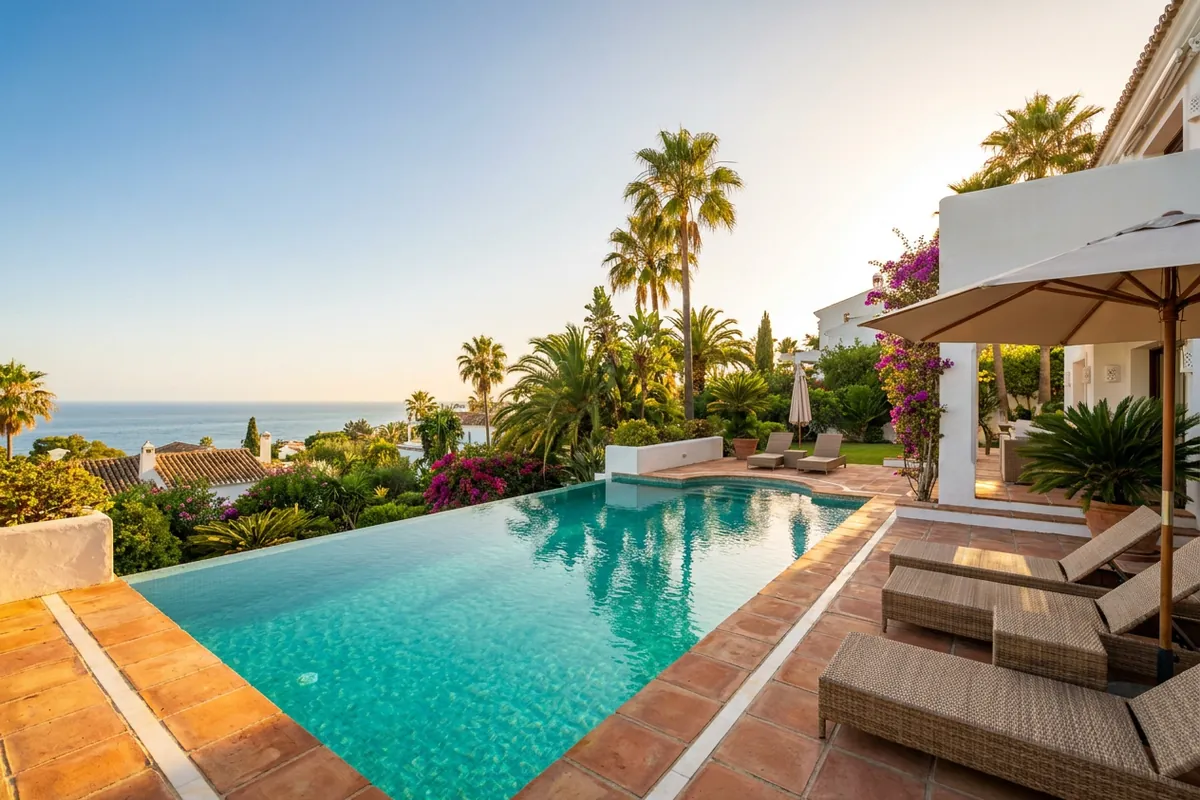
Why Buy From Us
Trusted Local Professionals
We connect you with vetted installers and specialists across the Costa del Sol — Estepona to Nerja.
Free, No-Obligation Quotes
Compare options and get a clear local price. No pressure, no guesswork.
Service in Your Language
Quotes and support in English, German, Dutch and French — every step.
We Live Here Too
We're expats ourselves. We understand your home because we know this coast — climate, salitre, permits.
Get Your Free Outdoor Living Quote
Tell us what you need. We respond within 2 hours with pricing and availability.
or message us directly
WhatsApp Us NowFrequently Asked Questions
How do I get a quote for swimming pools in Marbella?
How much do swimming pools cost in Marbella?
Do you cover Marbella?
Do I need a licence for swimming pools in Marbella?
 JW'"
/>
JW'"
/>
Founder & Outdoor Living Specialist
Founder of Costa del Sol Outdoors. Outdoor & interior designer based in Estepona, helping expats create beautiful Mediterranean outdoor spaces with trusted local installers.