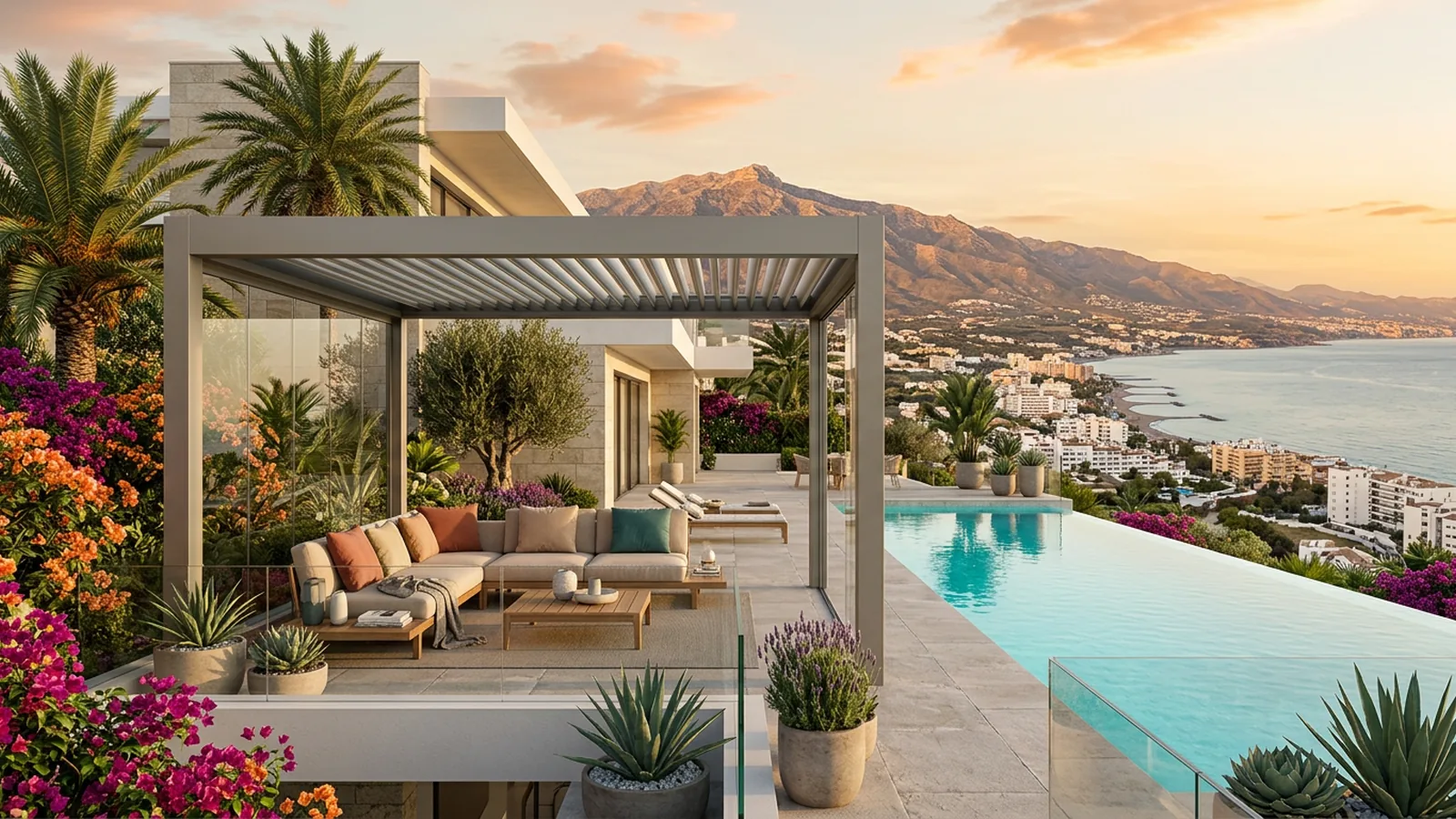
Parasols & Shade Sails in Torremolinos
Premium parasols & shade sails for your Torremolinos home — designed and installed by trusted local pros. Free, no-obligation quotes.
Get Your Free QuoteHigh-Performance Parasoles y Sombrillas Grandes in Torremolinos: Wind, Salt, and Sun Engineering for the Costa del Sol
Shading a terrace or garden in Torremolinos requires far more than simply buying an off-the-shelf umbrella. As the gateway to the Costa del Sol Occidental, Torremolinos occupies a unique geographical strip. Nestled at the foot of the Sierra de Mijas and stretching across nearly 7 kilometres of Mediterranean coastline, this bustling town of 74,289 residents (according to the 2025 padrón municipal, up from 70,933 in the 2024 INE data and first crossing the 70,000 threshold in 2023 with 70,434) experiences some of the most demanding environmental conditions in Málaga province.
With 320+ sunny days per year and approximately 2,901 annual sun hours, the UV load here is relentless. Summer temperatures regularly hover around 30 degrees Celsius, but when the hot, dry terral wind blows down off the Sierra de Mijas and inland mountain ranges, temperatures spike sharply, testing the thermal limits of outdoor spaces. Combine this with the high salitre (salt spray) coming off the Alboran Sea and the sudden, powerful levante (east/southeast) sea breezes, and standard retail umbrellas quickly warp, rust, or tear.
For the cosmopolitan mix of residents here—where foreign nationals make up approximately 24.2% of the population (18,003 residents representing over 121 nationalities, led by Morocco, Italy, the United Kingdom, Ukraine, Argentina, Colombia, and China)—outdoor living is a year-round priority. However, because Torremolinos is one of the densest, most built-up resort towns on the coast, the property profile is heavily apartment-led. From the iconic, high-rise apartment blocks of Playamar and La Colina to the dense beachfront developments of El Bajondillo and La Carihuela, space is at a premium. While grand villas do climb the upper slopes of Montemar and El Pinillo, most residents are looking to maximize balconies, penthouses, and compact terraces.
To achieve this safely and stylishly, investing in professional-grade, large-format parasols (parasoles y sombrillas grandes) is the ultimate solution. Delivered and installed correctly, these systems provide high-end architectural shade without the permanence or structural complexity of heavy construction.
The Torremolinos Climate: Why Standard Umbrellas Fail
To understand why commercial-grade engineering is necessary for residential terraces in Los Álamos or El Calvario, we must look at the microclimate of Torremolinos:
1. High UV Load and the Degradation of Fabrics
With a summer UV index frequently peaking at 9 to 10+ between June and August, cheap polyester canopies will degrade, fade, and become brittle within a single season. Professional-grade parasols utilize solution-dyed acrylic fabrics (such as Tempotest or Sunbrella). In these fabrics, the pigment is locked into the fiber core during manufacturing, ensuring the canopy retains its color and structural integrity despite 320+ days of intense Mediterranean exposure.
2. Marine Salitre (Salt Air) Corrosion
The coastal strip of Torremolinos, stretching from the Guadalmar border at Los Álamos down to the Benalmádena marina boundary, is highly corrosive. Salt-laden air (salitre) accelerates the oxidation of cheap steel frames, causing joints to lock and pulleys to snap. High-performance parasols feature marine-grade, anodized aluminum poles and powder-coated structures with stainless steel (Inox 316) hardware, ensuring they remain rust-free even when positioned on frontline beach properties in El Bajondillo.
3. The Wind Dynamics: Levante, Poniente, and the Terral
Because Torremolinos is divided by an emblematic cliff (the Bajondillo escarpment) that rises to an altitude of roughly 49 meters, wind currents are highly unpredictable.
- The Levante: This damp, easterly wind can blow steadily for days, creating constant pressure on open canopies.
- The Terral: This dry, scorching wind drops down from the Sierra de Mijas, creating sudden thermal drafts and turbulent updrafts.
- The Solution: Heavy-duty parasols must be engineered to withstand these forces. Premium models are rated up to Class 6 under the UNE-EN 13659 standard, meaning they can handle wind loads up to 175 km/h when closed, and significant wind speeds when open, thanks to integrated wind vents, heavy-duty ribs, and articulating joints.
Cantilever vs. Center-Pole: Choosing the Right Design for Your Space
Depending on whether you are shading a poolside deck in a Montemar villa or a compact balcony overlooking the sea in Playamar, the mechanical design of your parasol is critical.
Cantilever Parasols (Sombrillas Excéntricas)
Cantilever parasols feature a side-mounted mast, suspending the canopy over your seating or dining area without a central pole blocking the view or the conversation.
- Best For: Large terraces, lounge areas, and poolside dining tables.
- Key Features: Look for models with 360-degree rotation and multi-tilt mechanisms. This allows you to adjust the canopy as the sun dips lower over the Sierra de Mijas, blocking the late-afternoon glare without moving the heavy base.
- Wind Note: Because the canopy is suspended from one side, cantilever models are more susceptible to wind sway. They require heavy ballast (often 120 kg to 150 kg of granite or concrete slabs) or direct bolting into the concrete slab of the terrace.
Center-Pole Parasols (Sombrillas Centrales)
The classic design, where the support mast sits directly in the center of the canopy.
- Best For: Exposed wind zones, narrow balconies, and dining tables with pre-drilled parasol holes.
- Key Features: Center-pole models distribute wind forces symmetrically, making them inherently more stable than cantilever designs in high-wind areas like frontline Playamar or the elevated heights of La Colina.
- Wind Note: When paired with a heavy-duty steel base (50 kg to 80 kg), a high-quality center-pole parasol can remain open in moderate sea breezes where a cantilever would need to be closed.
Navigating Local Regulations, Communities, and the Ley LISTA
Installing large-format shading in Torremolinos requires careful attention to local planning laws, coastal restrictions, and community guidelines.
The Ayuntamiento de Torremolinos and Urbanism
Urban planning in the municipality is governed by the Revisión-Adaptación del PGOU (definitively and partially approved in 2019, published in the BOJA in 2020). While the TSJA (Tribunal Superior de Justicia de Andalucía) precautionarily suspended parts of this plan on environmental grounds, approximately 90% of those suspensions have been lifted, meaning development and home renovations are highly regulated.
Under Andalusia's Ley LISTA (Ley 7/2021), the process for home improvements has been streamlined:
- Minor Non-Structural Works: The installation of non-permanent shading structures like high-end parasols, retractable awnings, glass curtains, or artificial grass does not require a complex building license. Instead, they proceed via a Declaración Responsable de obra menor (Responsible Declaration for minor works). This requires submitting a basic budget and paying a flat administrative fee starting from approximately €75.
- Structural Works: If you plan to build a permanent, heavy wooden or metal pergola that anchors deeply into the structural slab, you may need a full licencia de obra mayor, requiring a basic project designed by a competent technician (architect or technical engineer).
- The Ley de Costas: Frontline coastal parcels (especially in La Carihuela and El Bajondillo) fall under the strict state Ley de Costas (Coastal Law) servidumbre setbacks. The Ayuntamiento has faced past complaints over alleged non-compliance along the beachfront, meaning any permanent or semi-permanent structure near the maritime-terrestrial zone is heavily scrutinized. Large, removable parasols are highly favored here because they do not constitute permanent construction, bypassing complex coastal authorization processes.
Comunidad de Propietarios (HOA) Approvals
Because Torremolinos is dominated by dense apartment stock, any installation that alters the external aesthetic of a building—such as glass curtains, awnings, or large parasols that extend beyond the balcony line—usually requires formal approval from your comunidad de propietarios.
- Most communities have strict rules regarding the color of fabrics (often requiring cream, beige, or white to match the building facade).
- Always consult your community administrator before purchasing a large cantilever parasol to ensure the fabric color and installation method comply with community bylaws.
Complete Outdoor Transformation: Price Orientation in Torremolinos
To help you budget for your outdoor renovation, here is a realistic price orientation for professional installations on the Costa del Sol:
| Product / Service | Price Range (Installed / Delivered) | Key Considerations for Torremolinos |
|---|---|---|
| Premium Large Cantilever Parasol | €1,200 – €4,500+ | Marine-grade aluminum, Tempotest/Sunbrella fabric, 120kg+ base. |
| Bioclimatic Pergola | €300 – €800 per m² | Motorized aluminum louvres; ideal for wind-exposed Montemar villas. |
| Glass Curtains (Cerramientos de Cristal) | €300 – €500 per m² | Frameless sliding glass; perfect for enclosing Playamar balconies. |
| Outdoor Kitchens | €4,000 – €15,000+ | Must use Inox 316 stainless steel or marine-grade polymer to resist salt air. |
| Artificial Grass (Césped Artificial) | €25 – €60 per m² | High UV-resistance required to prevent melting under reflected window glare. |
Professional Installation: Why Anchoring and Delivery Matter
A large-format parasol is only as safe as its anchorage. In Torremolinos, where sudden wind gusts can lift a lightweight base and turn a 4-meter canopy into a dangerous sail, professional installation is highly recommended.
1. In-Ground Anchoring (Anclaje Empotrado)
For villa gardens in El Pinillo or large ground-floor terraces in Los Álamos, the safest anchoring method is an in-ground sleeve. A professional installer digs a small pit, pours concrete, and sets a steel sleeve flush with the terrace tiles. The parasol mast slides directly into this sleeve. When winter arrives, the parasol can be removed, and a flush-fitting cap covers the sleeve, leaving your terrace completely unobstructed.
2. Heavy-Duty Mobile Bases
If you live in a penthouse in Playamar where drilling into the tiled terrace floor is impossible due to waterproofing membranes, a mobile base is required. These bases utilize heavy concrete, granite, or water-fillable plastic casings weighing up to 150 kg. Professional installers will ensure the base is fitted with heavy-duty, lockable industrial casters, allowing you to roll the parasol across your terrace safely when needed, and lock it securely in place before opening the canopy.
3. Wind Sensors and Smart Integration
For ultimate peace of mind, premium motorized parasols can be integrated with automated wind sensors. If a sudden terral or levante wind exceeds safe operating limits (typically 35-40 km/h for open canopies), the sensor automatically triggers the motorized mast to fold the canopy down, protecting your investment even when you are dining out in the center of Torremolinos.
By selecting high-performance, marine-grade materials and securing them with professional anchoring, you can create a safe, shaded oasis that withstands the unique environmental challenges of the Costa del Sol. Whether you are looking to shade a compact balcony in El Calvario or a sprawling poolside deck in Montemar, investing in quality parasoles y sombrillas grandes ensures your outdoor space remains comfortable, beautiful, and safe for years to come.
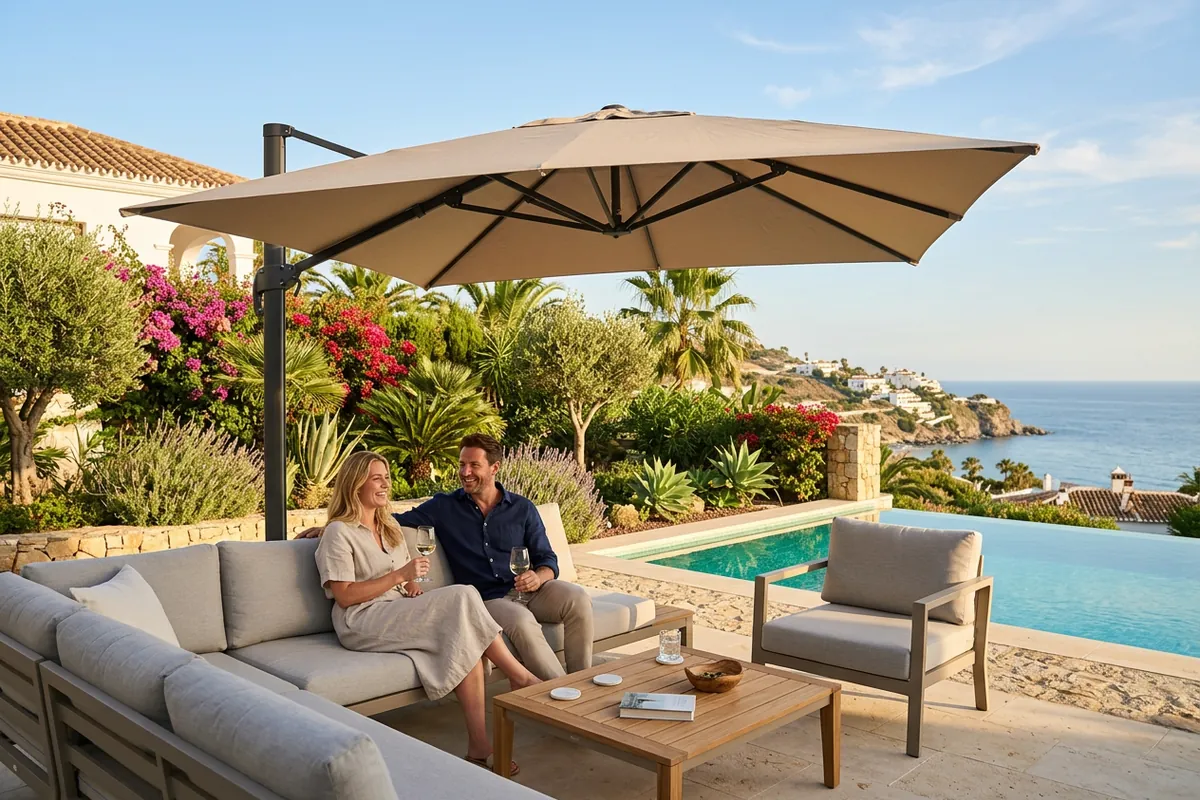
Why Buy From Us
Trusted Local Professionals
We connect you with vetted installers and specialists across the Costa del Sol — Estepona to Nerja.
Free, No-Obligation Quotes
Compare options and get a clear local price. No pressure, no guesswork.
Service in Your Language
Quotes and support in English, German, Dutch and French — every step.
We Live Here Too
We're expats ourselves. We understand your home because we know this coast — climate, salitre, permits.
Get Your Free Outdoor Living Quote
Tell us what you need. We respond within 2 hours with pricing and availability.
or message us directly
WhatsApp Us NowFrequently Asked Questions
How do I get a quote for parasols & shade sails in Torremolinos?
How much do parasols & shade sails cost in Torremolinos?
Do you cover Torremolinos?
Do I need a licence for parasols & shade sails in Torremolinos?
 JW'"
/>
JW'"
/>
Founder & Outdoor Living Specialist
Founder of Costa del Sol Outdoors. Outdoor & interior designer based in Estepona, helping expats create beautiful Mediterranean outdoor spaces with trusted local installers.