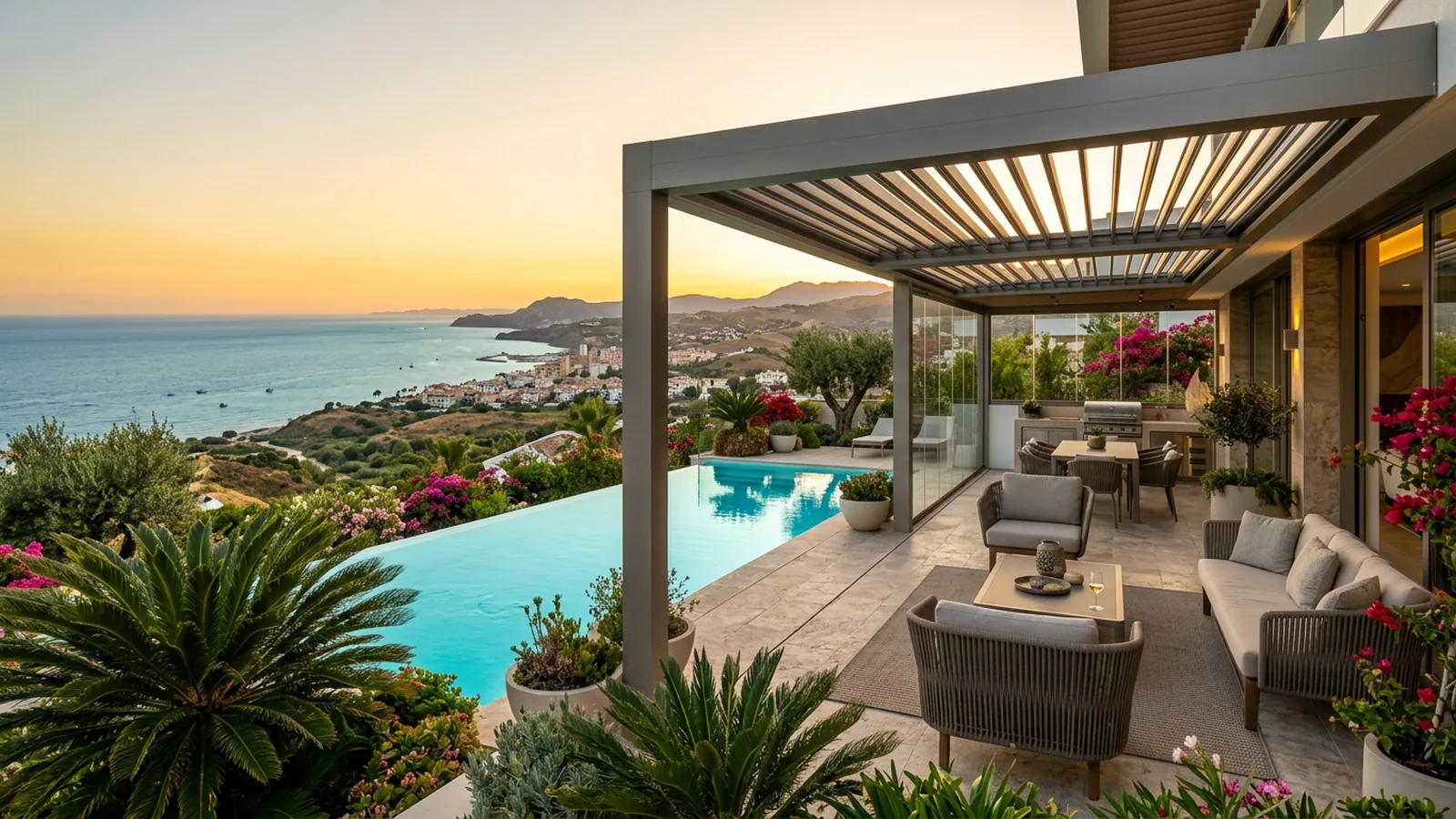
Kamado BBQs in Manilva
Premium kamado bbqs for your Manilva home — designed and installed by trusted local pros. Free, no-obligation quotes.
Get Your Free QuotePremium Kamado Ceramic Grills & Charcoal BBQs in Manilva: The Ultimate Guide to Coastal Outdoor Cooking
Manilva occupies a unique and breathtaking position at the southwestern tip of the Costa del Sol Occidental in Málaga province. Bordering Casares and the province of Cádiz at the Río Guadiaro, this coastal municipality spans eight kilometers of Mediterranean shoreline. From the historic watchtowers of Punta Chullera to the bustling coastal hub of San Luis de Sabinillas, the traditional fishing enclave of Castillo de la Duquesa (El Castillo), and the inland white village of Manilva Pueblo perched on the slopes of Cerro del Hacho at 140 meters elevation, this area is a paradise for outdoor living.
With approximately 2,900 hours of annual sunshine, low latitude (36°N) driving a high summer UV index of 9–10, and mild winters, the climate invites year-round terrace dining. However, cooking outdoors in Manilva presents distinct environmental challenges. The proximity to the Strait of Gibraltar—with Gibraltar and the North African coast often visible on the horizon—makes this zone notably windier than the rest of the Costa del Sol. Strong, moisture-laden Levante (easterly) winds sweep in from the sea, alternating with dry, warm Poniente (westerly) winds.
For homeowners in communities like Puerto de la Duquesa, Los Hidalgos, Jardines del Golf, Cármenes del Hacho, Cortijos del Golf, Marina del Castillo, Residencial Duquesa, Chullera, and Aldea Beach, choosing the right culinary equipment is essential. Standard metal barbecues quickly succumb to the intense marine salinity (salitre) and coastal winds. This is why high-performance barbacoas kamado cerámicas (ceramic kamado grills) have become the gold standard for international residents seeking a durable, versatile, and wind-resistant outdoor cooking solution.
The Kamado Advantage on the Wind-Swept Coast of Manilva
A ceramic kamado is not merely a charcoal barbecue; it is an ancient, clay-pot-inspired cooking vessel refined with modern aerospace-grade ceramics. For Manilva’s unique microclimate, the kamado offers several structural and thermal advantages over traditional open grills:
- Wind Resistance and Thermal Mass: The heavy, thick ceramic walls of a kamado insulate the charcoal fire from the strong Levante and Poniente winds. In an open metal grill, wind drafts cause rapid temperature fluctuations, burning through charcoal quickly and drying out meat. A kamado retains its internal heat, requiring minimal airflow adjustments even during gusty days in elevated areas like Cármenes del Hacho or beachfront terraces in Aldea Beach.
- Corrosion Resistance against Marine Salitre: The high salinity of Manilva’s coastal strip (particularly within the 100-meter marine protection zone of Sabinillas, El Castillo, and Chullera) destroys low-grade stainless steel and powder-coated sheet metal within a couple of seasons. High-quality kamados utilize thick, glazed ceramic bodies that are completely impervious to salt air. When paired with marine-grade 304 or 316 stainless steel bands, hinges, and draft gates, a kamado will withstand the coastal air indefinitely.
- Unmatched Fuel Efficiency: Because the ceramic dome retains heat so effectively, a single load of high-quality lump charcoal can burn for up to 15 to 20 hours at low temperatures (110°C) for slow-smoking, or handle multiple high-heat searing sessions (350°C+) without needing a refill. This is highly practical for long summer afternoons when the municipality's population triplicates with visiting family and holidaymakers.
- Versatility for International Palettes: Manilva is home to a highly international population. According to the municipal register (source: Ayuntamiento de Manilva based on INE data), the town has 18,818 registered residents (as of October 2024), though the official INE census figures stood at 17,157 (2024) and 17,551 for the foreign residency breakdown. Around 40.5% of the population (7,114 residents) are foreign nationals representing 93 different nationalities. The British community is the largest (2,801 residents), followed by Moroccans (854), Romanians (489), Italians (300), Bulgarians (165), Germans (160), Belgians (159), Argentines (149), Poles (129), and Swedes (127). A kamado caters perfectly to these diverse culinary traditions:
- British & Northern European Roasts: Easily handles Sunday roasts, whole chickens, and slow-cooked pork shoulders.
- Argentine Asado & Steaks: Achieves the extreme, direct infrared heat (350°C to 400°C) required to sear premium cuts of beef instantly while keeping the interior juicy.
- Italian Stone-Baked Pizzas: With a ceramic deflector and a pizza stone, a kamado transforms into a high-heat wood-fired oven, baking a Neapolitan pizza in under three minutes.
- Moroccan Tajines & Slow Stews: The precise temperature control allows for hours of gentle simmering, mimicking traditional clay-pot cooking.
Selecting the Right Kamado: Sizes, Materials, and Coastal Specs
When investing in a ceramic kamado for your property in Manilva, pay close attention to the specifications to ensure longevity against the elements:
| Kamado Size | Cooking Grid Diameter | Best Suited For | Ideal Property Type in Manilva |
|---|---|---|---|
| Junior / Compact | 33–38 cm | 2–4 People | Apartments in Sabinillas, Marina del Castillo, or Residencial Duquesa terraces |
| Classic / Medium | 45–48 cm | 4–8 People | Townhouses in Los Hidalgos, Aldea Beach, or Cármenes del Hacho |
| Big / XL | 55–61 cm | 8–16+ People | Large villas in Chullera, Cortijos del Golf, or properties with dedicated outdoor kitchens |
Coastal-Grade Material Requirements
- The Ceramic Glaze: Ensure the outer glaze is UV-stable. The intense Mediterranean sun (UV index 9–10) can fade or crack cheap, non-porous coatings. High-quality kamados feature active glaze formulas fired at over 1200°C, ensuring the color remains vibrant and the surface does not craze under the summer sun.
- Hardware & Cart: Avoid painted carbon steel carts. The salt air (salitre) will cause rust bubbles under the paint within months. Opt for carts made of heavy-duty powder-coated galvanized steel, marine-grade stainless steel, or place the kamado directly into a custom built-in outdoor kitchen made of concrete, local stone, or marine-grade aluminum.
- The Top Vent (Daisy Wheel): This is the most vulnerable component to wind and rain. Traditional cast-iron top vents will rust if neglected. Look for kamados equipped with anodized aluminum or 304 stainless steel top vents that feature rain shields to prevent water from entering the dome during winter downpours (Manilva averages about 600 mm of rain per year, often concentrated in heavy autumn and winter storms).
Integrating Your Kamado into Your Outdoor Space: Permitting & Community Rules
Manilva’s real estate market consists of a mix of apartments, penthouses, and townhouses in coastal golf developments, alongside high-end villas in Chullera or overlooking La Duquesa Golf. Integrating a heavy ceramic kamado (which can weigh anywhere from 45 kg to over 140 kg) requires careful planning regarding wind safety, weight distribution, and local regulations.
Ayuntamiento de Manilva & Urbanismo Regulations
If you plan to build a permanent outdoor kitchen, brick barbecue, or install protective structures like pergolas and glass curtains to shield your cooking area, you must navigate the local planning framework managed by the Gerencia Municipal de Urbanismo under the current Plan General de Ordenación Urbana (PGOU), which originates from 1994.
- Declaración Responsable (Responsible Declaration): Minor cosmetic works, installing non-structural, demountable pergolas, laying artificial grass (césped artificial), or setting up portable outdoor appliances on existing terraces can generally be processed via a Declaración Responsable through the municipal electronic office (sede electrónica).
- Licencia de Obra (Building License): If your outdoor kitchen project involves structural changes, permanent enclosures that increase the built volume of the property (such as structural glass curtains or solid roofs), or building a swimming pool, you must obtain a formal municipal license.
- Ley de Costas (Coastal Law): Because Manilva features 8 kilometers of coastline, properties situated in frontline developments—such as portions of Sabinillas, El Castillo, Chullera, and Puerto de la Duquesa—fall under the strict jurisdiction of the Spanish Coastal Law (Ley de Costas). This includes a protection easement (servidumbre de protección) of 100 meters (which may be reduced to 20 meters in consolidated urban zones) and a transit easement (servidumbre de tránsito) of 6 meters. Any new permanent construction or installation within these zones requires prior authorization from the Demarcación de Costas de Andalucía-Mediterráneo.
- Comunidades de Propietarios (HOAs): Beyond municipal permits, if your property is located within an urbanización (such as Residencial Duquesa, Marina del Castillo, or Jardines del Golf), any visible modification to terraces, penthouses, or gardens—including pergolas, awnings, or permanent outdoor chimneys—must be approved by your community of owners to maintain aesthetic harmony.
Wind and Sun Protection Specs
To protect your cooking area from the elements, consider these professional-grade installations:
- Bioclimatic Pergolas: These cost between 300 to 800 EUR per square meter depending on automation. Ensure the structure is rated for coastal winds. In Manilva, pergolas should feature wind resistance certified up to Class 6 (UNE-EN 13659), capable of withstanding gusts up to 175 km/h, and be equipped with automated wind sensors that retract awnings or open louvers when the Levante or Poniente blows hard.
- Glass Curtains (Cortinas de Cristal): To block the wind while preserving views of the Mediterranean or the Duquesa golf courses, glass curtains cost between 300 to 500 EUR per square meter. Ensure the profiles are made of marine-grade anodized aluminum to prevent corrosion from the salt spray.
- Outdoor Kitchen Structures: A fully integrated outdoor kitchen housing your kamado, sink, and prep areas typically ranges from 4,000 to 15,000 EUR, depending on whether you use concrete, HPL (High-Pressure Laminate), or marine-grade aluminum frames.
- Artificial Grass: For villa gardens or ground-floor terraces, professional installation of high-density, UV-stabilized artificial grass ranges from 25 to 60 EUR per square meter.
Delivery, Assembly, and Maintenance in Manilva
Due to their extreme weight and fragile ceramic composition before assembly, ordering a kamado requires professional logistical handling.
Delivery and Installation Considerations
- Weight & Access: A Classic-sized kamado weighs around 80–90 kg. Penthouses in Puerto de la Duquesa or multi-level townhouses in Los Hidalgos often have narrow stairwells or elevator weight limits. Professional delivery services on the Costa del Sol utilize specialized stair-climbing hand trucks or, in some cases, exterior furniture lifts to safely deposit the kamado onto high terraces.
- Positioning: Place your kamado on a level, fireproof surface. If placing it on a wooden or composite deck, always use a non-combustible hearth pad or a kamado table nest to elevate the hot bottom of the grill off the surface. Position the grill so that the prevailing Levante or Poniente winds blow across the unit rather than directly into the bottom draft gate, which could cause sudden temperature spikes.
Maintenance in a High-Saline Environment
To keep your kamado performing perfectly on the Manilva coast, follow this maintenance routine:
- Tighten the Bands: Ceramic expands and contracts with heat, and the metal tension bands holding the dome lid can loosen over time. Check and tighten the bolts twice a year, especially before the busy summer season when the local population swells.
- Protect the Metalwork: Spray the exterior hinges, springs, and metal bands with a thin coat of marine-grade rust inhibitor or high-temperature silicone spray once a season to shield them from the humid salt air.
- Use a High-Quality Cover: When not in use, protect your kamado with a heavy-duty, breathable, UV-resistant cover. Secure the cover tightly around the base to prevent the strong coastal winds from lifting it off.
- Mold Prevention: The high humidity of the Costa del Sol Occidental can lead to mold growth inside the kamado if it is left closed and unused for several winter weeks. If this happens, do not use chemical cleaners. Simply load the firebox with charcoal and run a high-heat burn (250°C to 300°C) for an hour to naturally self-clean and sterilize the interior back to its clean ceramic state.
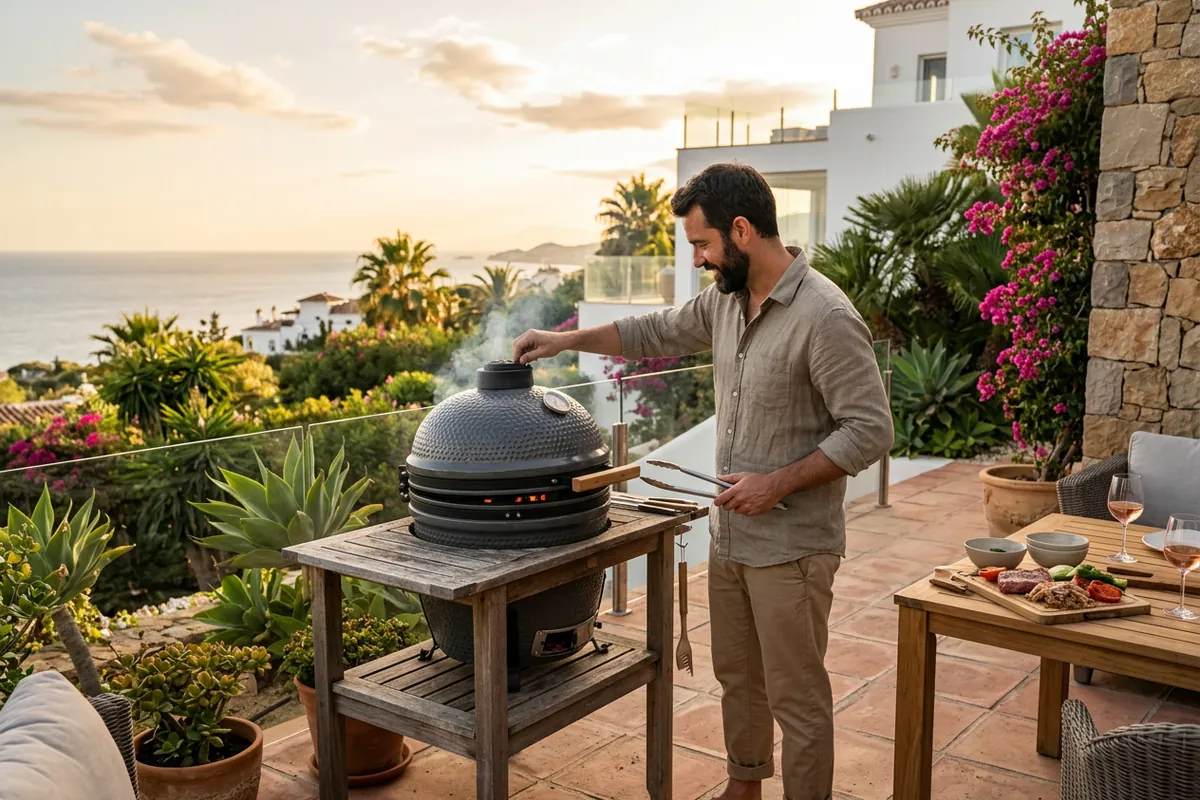
Why Buy From Us
Trusted Local Professionals
We connect you with vetted installers and specialists across the Costa del Sol — Estepona to Nerja.
Free, No-Obligation Quotes
Compare options and get a clear local price. No pressure, no guesswork.
Service in Your Language
Quotes and support in English, German, Dutch and French — every step.
We Live Here Too
We're expats ourselves. We understand your home because we know this coast — climate, salitre, permits.
Get Your Free Outdoor Living Quote
Tell us what you need. We respond within 2 hours with pricing and availability.
or message us directly
WhatsApp Us NowFrequently Asked Questions
How do I get a quote for kamado bbqs in Manilva?
How much do kamado bbqs cost in Manilva?
Do you cover Manilva?
Do I need a licence for kamado bbqs in Manilva?
 JW'"
/>
JW'"
/>
Founder & Outdoor Living Specialist
Founder of Costa del Sol Outdoors. Outdoor & interior designer based in Estepona, helping expats create beautiful Mediterranean outdoor spaces with trusted local installers.