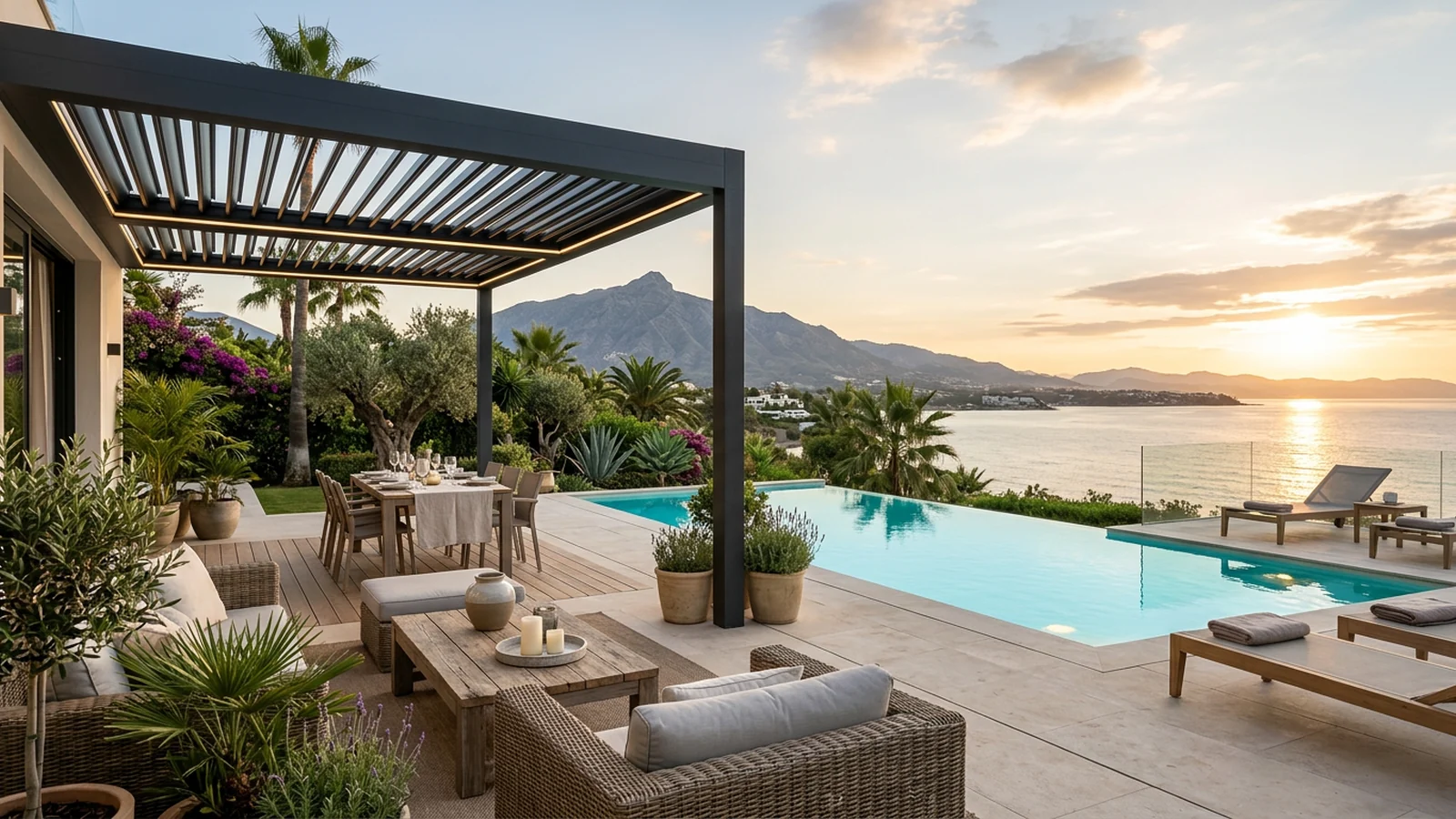
Swimming Pools in Ronda
Premium swimming pools for your Ronda home — designed and installed by trusted local pros. Free, no-obligation quotes.
Get Your Free QuoteBuilding, Renovating, and Maintaining Swimming Pools in Ronda
Building or maintaining a swimming pool in Ronda is a vastly different experience from doing so on the crowded beaches of the Costa del Sol. Situated on a dramatic escarpment divided by the deep El Tajo gorge, Ronda is the beating heart of the mountainous Serranía de Ronda comarca. While it sits within the Málaga province, this inland gem boasts a unique microclimate, a distinct geological landscape, and a highly specific regulatory environment.
With a population of 33,401 according to the latest INE data, Ronda is home to a smaller, culturally integrated expat community making up roughly 8% of the population. Unlike the coastal strip, the foreign residents here—predominantly British, Moroccan, and French—prefer historic charm, rugged mountain vistas, and authentic Andalusian town life over bustling beach clubs.
For property owners in urbanisations like La Planilla, El Arenal, La Torrecilla, and San Rafael, owning a pool (or piscina) is the ultimate way to navigate Ronda's scorching inland summers. However, the mountain terrain, winter frosts, and strict municipal guidelines require a highly localized approach to pool construction, renovation, heating, and maintenance.
Pool Construction in Ronda: Concrete vs. Fibreglass
When planning a new pool build in Ronda, the first major decision is choosing between a traditional cast concrete (gunite) pool or a pre-formed fibreglass shell. Because Ronda is inland, the cost of transporting large fibreglass shells up the winding mountain roads of the Serranía de Ronda must be factored into the logistics.
A standard pool construction project in Ronda generally ranges from 20,000 EUR to 45,000 EUR, depending on the material, size, access difficulty, and terrain.
Concrete Pools (Gunite)
Concrete pools are the gold standard in Ronda, particularly for properties with irregular plots or those situated on the sloping terrains of La Planilla or the rustic outskirts of La Torrecilla.
- Pros: Highly customizable in shape, size, and depth. They can be engineered with retaining walls to handle the dramatic slopes of the Ronda landscape.
- Cons: Longer construction times (typically 6 to 10 weeks) and higher initial cost.
- Price Estimate: 30,000 EUR to 45,000 EUR for a standard 8x4 metre pool.
Fibreglass Pools
For flatter plots in established residential zones like El Arenal or San Rafael, a pre-engineered fibreglass pool is a highly efficient alternative.
- Pros: Rapid installation (often completed in under two weeks) and a smooth, non-porous surface that resists algae growth.
- Cons: Limited shapes and sizes. Transporting these large structures up the mountain passes requires specialized transport permits and careful route planning.
- Price Estimate: 20,000 EUR to 30,000 EUR.
Geological Considerations: The Ronda Escarpment
The ground composition in the Serranía de Ronda varies from hard clay to solid limestone rock. Excavation in areas close to the El Tajo gorge or on rocky hillsides often requires heavy-duty pneumatic breakers, which can add to the initial site-preparation costs. Furthermore, because Ronda experiences minor seismic activity typical of the southern Baetic Cordillera, concrete pools must be engineered with reinforced steel rebar grids to prevent structural cracking.
Navigating Ayuntamiento de Ronda Permits and Regulations
Obtaining the correct building permits from the Ayuntamiento de Ronda is a critical step that must be completed before any ground is broken. The municipal planning laws are governed by the PGOU (Plan General de Ordenación Urbana) and the regional Andalusian planning framework, LISTA (Ley de Impulso para la Sostenibilidad del Territorio de Andalucía).
The Casco Antiguo (Historic Quarter) Nuance
If your property is located within the historic casco antiguo (the old town surrounding the gorge), you will face strict heritage protection rules. The Ayuntamiento de Ronda enforces rigorous aesthetic guidelines to preserve the town's cultural heritage.
- Restrictions: In the historic zone, visible modern pool equipment, bright blue mosaic tiles that clash with historic vistas, and elevated pool decking may be restricted. In some cases, only plunge pools or highly discreet, natural-toned tiled pools are permitted. Archaeological surveys may also be required during excavation, as Ronda's subsoil is rich in Roman, Moorish, and medieval remains.
- Urbanisations and Rustic Land: In residential urbanisations like El Arenal, San Rafael, or La Planilla, the process is more straightforward. However, if your property is on rustic land (suelo rústico) in the Serranía, building a new pool requires a specialized environmental and municipal approval process, which has been somewhat streamlined under LISTA but still demands professional architectural plans.
There are two main types of permits you will need to file:
- Obra Menor (Minor Works): For simple pool renovations, re-tiling, or installing safety enclosures.
- Obra Mayor (Major Works): Required for all new pool constructions. This requires a project signed by a registered architect (arquitecto) or technical engineer, which is then submitted to the Ayuntamiento for approval. Expect municipal tax and license fees to total roughly 4% to 6% of the estimated construction budget.
Pool Renovation: Breathing New Life into Older Piscinas
Many expats purchasing historic villas or rustic fincas in Ronda inherit pools built in the 1980s or 1990s. These older pools often suffer from structural settling, outdated filtration systems, or water loss due to shifting mountain soils.
Re-tiling and Waterproofing
Traditional Spanish pools are finished with glass mosaic tiles (gresite). Over time, the grout degrades, and tiles can pop off, especially during Ronda's freezing winter nights.
- The Solution: Complete stripping of old tiles, application of a high-performance waterproof membrane (such as a two-part cementitious mortar), and re-tiling with modern, frost-resistant glass tiles.
- Alternative Finish (Reinforced PVC Liners): For pools with minor structural movement, installing a reinforced PVC liner (such as Alkorplan) is highly recommended. This acts as a completely watertight, flexible bag inside the pool, bridging any minor cracks that develop in the concrete shell due to ground movement.
Upgrading to Saltwater Chlorination
A major trend among the British, French, and local Spanish residents in Ronda is converting traditional chlorine pools to saltwater electrolysis systems.
- How it works: Salt is added to the pool water at a low concentration. A salt cell converts this salt into natural chlorine, which sanitizes the water and then reverts back to salt.
- Benefits: It is gentler on the eyes and skin, eliminates the harsh chemical smell of packaged chlorine, and reduces ongoing chemical maintenance costs.
Microclimate Challenges: Wind, Sun, and Winter Frosts
Ronda’s inland geography creates a climate of extremes. Unlike the coastal areas of the Costa del Sol, Ronda does not benefit from the stabilizing thermal mass of the Mediterranean Sea.
Low Salitre (Salt Spray) but High UV and Frost
Because Ronda is situated far inland, the level of coastal salitre (corrosive sea salt spray) is exceptionally low. This means you do not need to worry about the rapid marine-grade corrosion of metal fixtures that plagues coastal properties. However, Ronda makes up for this with high UV exposure in the summer and freezing temperatures in the winter.
- Material Selection: Any outdoor installations, pool fittings, and structural elements must be highly UV-stable to prevent fading and cracking under the intense inland sun.
- Winter Protection: Winter temperatures in Ronda regularly drop below freezing. Pool pipework must be buried deep enough to avoid frost damage, and pool equipment filtration rooms should be insulated.
The Terral and Levante Winds
Ronda is subject to strong mountain winds, including the hot terral wind from the interior and the gusty Levante from the east. These winds carry dust and organic debris into the pool, causing rapid water evaporation and temperature drops.
To combat these winds and maximize outdoor comfort, pool surrounds often incorporate shade structures:
- Awnings and Toldos: Motorised awnings are highly popular for pool houses and terraces. Due to the high wind speeds in the Serranía, these must be fitted with automatic wind sensors that retract the awning when wind speeds exceed safe limits. Awnings should meet the Clase 6 UNE-EN 13659 standard, certifying resistance to winds up to approximately 175 km/h. Motorised awnings and toldos generally cost between 150 EUR and 450 EUR per square metre.
- Fixed Pergolas: For a more permanent shade solution, fixed aluminium or wooden pergolas are installed near the pool deck. These structures cost between 250 EUR and 600 EUR per square metre, depending on whether they feature bioclimatic rotating slats or fixed insulated roofing.
Pool Heating: Extending the Ronda Swim Season
While coastal pool owners can swim from May to October without heating, Ronda’s high altitude (roughly 740 metres above sea level) means cooler nights and a shorter natural swimming season. Without heating, a pool in Ronda is typically only comfortable from mid-June to early September.
To extend your swimming season from April to November, a combination of heating and heat retention is essential.
1. Inverter Heat Pumps
Inverter heat pumps extract heat from the ambient air and transfer it to the pool water. Because Ronda's spring and autumn nights are chilly, an inverter heat pump is highly efficient, adjusting its output dynamically to maintain a constant temperature.
- Sizing: Due to the mountain climate, it is advisable to oversize the heat pump slightly compared to what would be used on the coast.
2. Solar Pool Covers (Thermal Blankets)
A heat pump is useless without a high-quality thermal cover. Running a heat pump without covering the pool at night will result in almost all the added heat evaporating into the cool mountain air. A geobubble thermal cover helps retain heat and reduces water evaporation by up to 95%, which is crucial in water-conscious inland Andalusia.
Maintenance and Water Care in the Serranía de Ronda
Maintaining a pool in Ronda requires a routine that accounts for the local water chemistry and seasonal weather shifts.
Dealing with Hard Water
The tap water in Ronda, sourced from local mountain aquifers and reservoirs, is notoriously hard (high in calcium carbonate).
- The Challenge: High calcium levels lead to rapid scale buildup on pool tiles, inside pipework, and on salt chlorinator cells.
- The Solution: Regular use of anti-scale treatments (sequestrants) and routine cleaning of salt cells with a mild acidic solution. It is also important to monitor the pH levels closely, as hard water naturally drives the pH up, reducing the effectiveness of your chlorine.
Winterizing the Pool (Invernación)
Because most expat owners in Ronda do not use their pools in the winter, proper winterization is key to avoiding freeze damage and saving water.
- Do Not Empty the Pool: The hydrostatic pressure of the surrounding mountain soil can crack or lift an empty concrete pool. Keep the pool full.
- Lower the Water Level Slightly: Bring the water level just below the skimmers to prevent water from freezing and cracking the plastic skimmer baskets.
- Add Winterizing Chemicals: Add a specialized invernador (winterizing liquid) in October and again in February to prevent algae growth during the cold months.
- Install Winter Floating Cushions: Place floating winter expansion cushions (or clean plastic jerry cans weighted with sand) across the pool surface. If the water freezes, these cushions compress, absorbing the expansion pressure of the ice and protecting the concrete pool walls from cracking.

Why Buy From Us
Trusted Local Professionals
We connect you with vetted installers and specialists across the Costa del Sol — Estepona to Nerja.
Free, No-Obligation Quotes
Compare options and get a clear local price. No pressure, no guesswork.
Service in Your Language
Quotes and support in English, German, Dutch and French — every step.
We Live Here Too
We're expats ourselves. We understand your home because we know this coast — climate, salitre, permits.
Get Your Free Outdoor Living Quote
Tell us what you need. We respond within 2 hours with pricing and availability.
or message us directly
WhatsApp Us NowFrequently Asked Questions
How do I get a quote for swimming pools in Ronda?
How much do swimming pools cost in Ronda?
Do you cover Ronda?
Do I need a licence for swimming pools in Ronda?
 JW'"
/>
JW'"
/>
Founder & Outdoor Living Specialist
Founder of Costa del Sol Outdoors. Outdoor & interior designer based in Estepona, helping expats create beautiful Mediterranean outdoor spaces with trusted local installers.